What is Demand Generation?
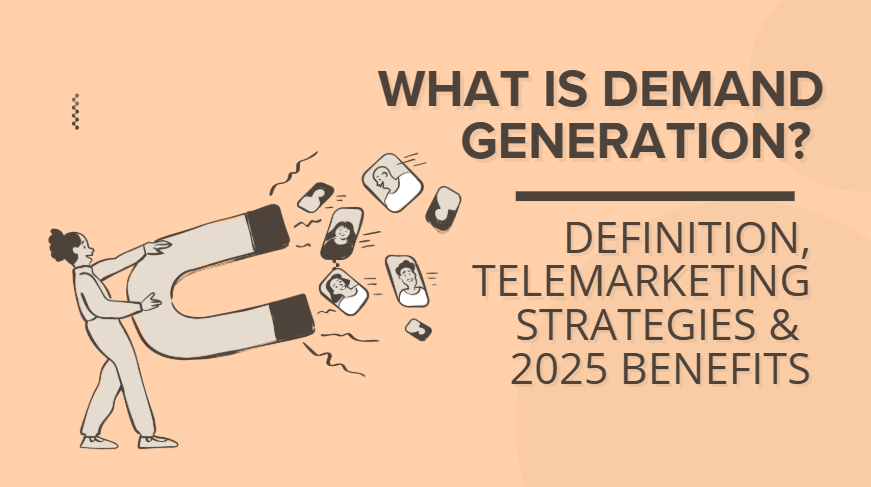
Demand generation is more than a marketing buzzword, it’s the lifeblood of sustainable business growth. Simply put, demand generation is the process of creating awareness, interest, and desire for your products or services to generate high-quality leads that eventually turn into paying customers.
In 2025, businesses face tougher competition, economic shifts, and a digital-first world. But here’s the truth: demand generation isn’t just about flashy ads or endless social posts, it’s about building trust and relationships.
That’s where telemarketing plays a surprising yet powerful role. Unlike purely digital tactics, a human voice on the phone can cut through digital noise, address objections instantly, and foster genuine connections.
Demand Generation Definition Explained
At its core, demand generation is a comprehensive, long-term marketing strategy that attracts, engages, and nurtures prospects throughout the buyer journey.
While lead generation focuses on capturing contact details (such as emails or phone numbers), demand generation goes deeper, educating, engaging, and qualifying prospects before they reach sales teams.
Key elements include:
- Awareness: Making potential customers know you exist.
- Engagement: Providing valuable interactions and building trust.
- Nurturing: Guiding prospects until they are ready to buy.
- Conversion: Handing over sales-ready leads to your team.
This holistic approach is why demand generation is considered the backbone of modern B2B marketing.
Why Demand Generation Matters for Australian Businesses in 2025
Australian businesses operate in a unique market where trust and relationships drive deals. Unlike mass-market consumer sales, B2B decision-making in Australia is often longer, relationship-based, and requires multiple touchpoints.
In 2025, demand generation matters because:
- Competition is rising: With global players targeting Australian markets, standing out is harder.
- Digital fatigue is real: Prospects are overwhelmed by ads, emails, and LinkedIn messages.
- Trust is key: Buyers prefer companies that demonstrate expertise and reliability over time.
For Australian companies, demand generation strategies that include personalized telemarketing stand out, because hearing a professional local caller creates credibility that digital messages can’t replicate.
Core Components of a Successful Demand Generation Strategy
Every winning demand generation strategy has several moving parts:
Content Marketing: Blogs, eBooks, and guides that provide value and position your brand as an expert.
Email Marketing: Nurturing prospects with tailored campaigns.
Telemarketing: Direct conversations to qualify prospects and set appointments.
Events & Webinars: Educational sessions that showcase thought leadership.
Database Cleansing: Ensuring your outreach targets the right audience.
Marketing Automation: Using technology to nurture leads at scale.
While many businesses lean heavily on digital content, telemarketing bridges the gap between interest and action, converting curiosity into concrete meetings.
Telemarketing as a Powerful Demand Generation Channel
Here’s where your competitors often miss the mark: telemarketing is still one of the most effective demand generation tools, especially in B2B.
Why?
Human Connection: Unlike digital ads, a phone call feels personal.
Qualification on the Spot: Trained callers can ask questions, filter out poor leads, and prioritize hot prospects.
Objection Handling: Objections like “send me an email” can be addressed instantly.
Appointment Setting: Telemarketing doesn’t just create awareness, it sets up real sales conversations.
For Australian businesses, local callers with neutral accents outperform offshore alternatives by building trust and professionalism in every interaction.
10 Proven Demand Generation Strategies for 2025
If you want demand generation that works in 2025, combine digital and human channels. Here are 10 proven strategies:
- Content-driven SEO blogs that rank on Google.
- LinkedIn networking & social selling.
- Email drip campaigns with personalization.
- Webinars targeting industry pain points.
- Case studies and testimonials to showcase proof.
- Database cleansing for accurate targeting.
- Telemarketing appointment setting to qualify and convert.
- Multi-channel retargeting ads for brand recall.
- Lead scoring & nurturing via automation tools.
- Direct mail + follow-up calls for high-value prospects.
The key? Don’t rely on one channel. A multi-touch approach ensures you capture attention and convert it into pipeline growth.
Why Human-to-Human Conversations Still Drive Demand
Even in 2025, when AI and automation dominate headlines, people still buy from people.
Cold emails can be ignored. Ads can be skipped. But a professional caller engaging in real conversation builds rapport instantly.
This human element is crucial in industries where purchases involve trust, risk, and high-value decisions. That’s why demand generation powered by telemarketing remains evergreen.
How Automation & Telemarketing Work Together
Automation doesn’t replace telemarketing, it amplifies it. Here’s how they integrate:
- CRM Integration: Automated data sync ensures no lead is lost.
- Follow-up Triggers: Automation sends emails after calls for consistent touchpoints.
- Lead Scoring: Automation identifies hot leads for callers to prioritize.
- Omnichannel Tracking: Calls + emails + ads = full visibility of buyer journey.
This balance of technology + human conversation ensures efficiency without losing personalization.
Top Benefits of Demand Generation for B2B Companies
When executed well, demand generation provides measurable benefits:
- Stronger Pipeline: More qualified leads entering the sales funnel.
- Better Conversion Rates: Leads are educated and engaged before sales.
- Improved ROI: Less wasted time chasing poor-quality leads.
- Brand Authority: Position your business as an industry expert.
- Faster Sales Cycles: Prospects move from interest to meeting quickly.
Case Study: Demand Generation with Telemarketing Professionals
A mid-sized Australian B2B company partnered with Telemarketing Professionals to improve its sales pipeline.
- Challenge: Their digital campaigns generated interest but low-quality leads.
- Solution: We combined database cleansing + targeted telemarketing, + appointment setting.
- Results:
- 12 high-quality appointments booked in the first month.
- 70% of calls reached decision-makers thanks to local callers.
- Conversion rate improved by 35% compared to digital-only leads.
- 12 high-quality appointments booked in the first month.
This demonstrates how human conversations transform demand generation into revenue.
5 Demand Generation Mistakes Businesses Should Avoid
Many businesses fail at demand generation because they:
- Rely only on digital ads without human follow-up.
- Neglect database cleansing wasting money on outdated contacts.
- Ignore local cultural nuances in outreach.
- Fail to measure and report campaign performance.
- Treat demand generation as a one-time project instead of an ongoing process.
Demand Generation Best Practices in 2025
To maximize results in 2025, follow these best practices:
- Mix digital + telemarketing for multi-touch engagement.
- Personalize outreach with industry-specific messaging.
- Invest in local callers to improve trust in Australia.
- Measure everything: appointments, conversions, and ROI.
- Stay compliant with Australia’s Do Not Call Register.
Final Thoughts: Demand Generation in 2025 and Beyond
Demand generation isn’t just about filling a funnel, it’s about creating trust, building authority, and converting interest into real revenue. In 2025, Australian businesses that combine digital strategies with professional telemarketing will outpace their competition.
If you’re ready to supercharge your demand generation, Telemarketing Professionals can design a campaign tailored to your business, combining the power of local callers, automation, and proven strategies.
Frequently Asked Questions About Demand Generation
What is the difference between demand generation and lead generation?
Lead generation captures contact details. Demand generation builds awareness, trust, and nurtures leads until they are sales-ready.
How does telemarketing support demand generation?
Telemarketing qualifies leads in real time, handles objections, and sets appointments, turning awareness into real opportunities.
What are the best demand generation strategies in 2025?
Combining telemarketing, content, automation, and personalization provides the strongest results.
Why is demand generation important for B2B businesses?
It ensures a steady flow of high-quality prospects, shortens sales cycles, and improves ROI.
How do Australian companies approach demand generation differently?
They prioritize local relationships, compliance, and trust-building, making local telemarketing especially effective.