B2B outreach rarely succeeds because of one perfectly written email or one well-timed phone call. The strongest prospecting strategies understand when to use each channel and, more importantly, when to move from one to another.
Email is useful for introducing your business, communicating value, and giving prospects an opportunity to engage on their own terms. But there comes a point where continuing to send emails can produce diminishing returns.
That is where a phone conversation can make the difference.
A prospect who has opened several emails, visited your website, downloaded information, or shown other buying signals may no longer need another automated follow-up. They may need a real conversation.
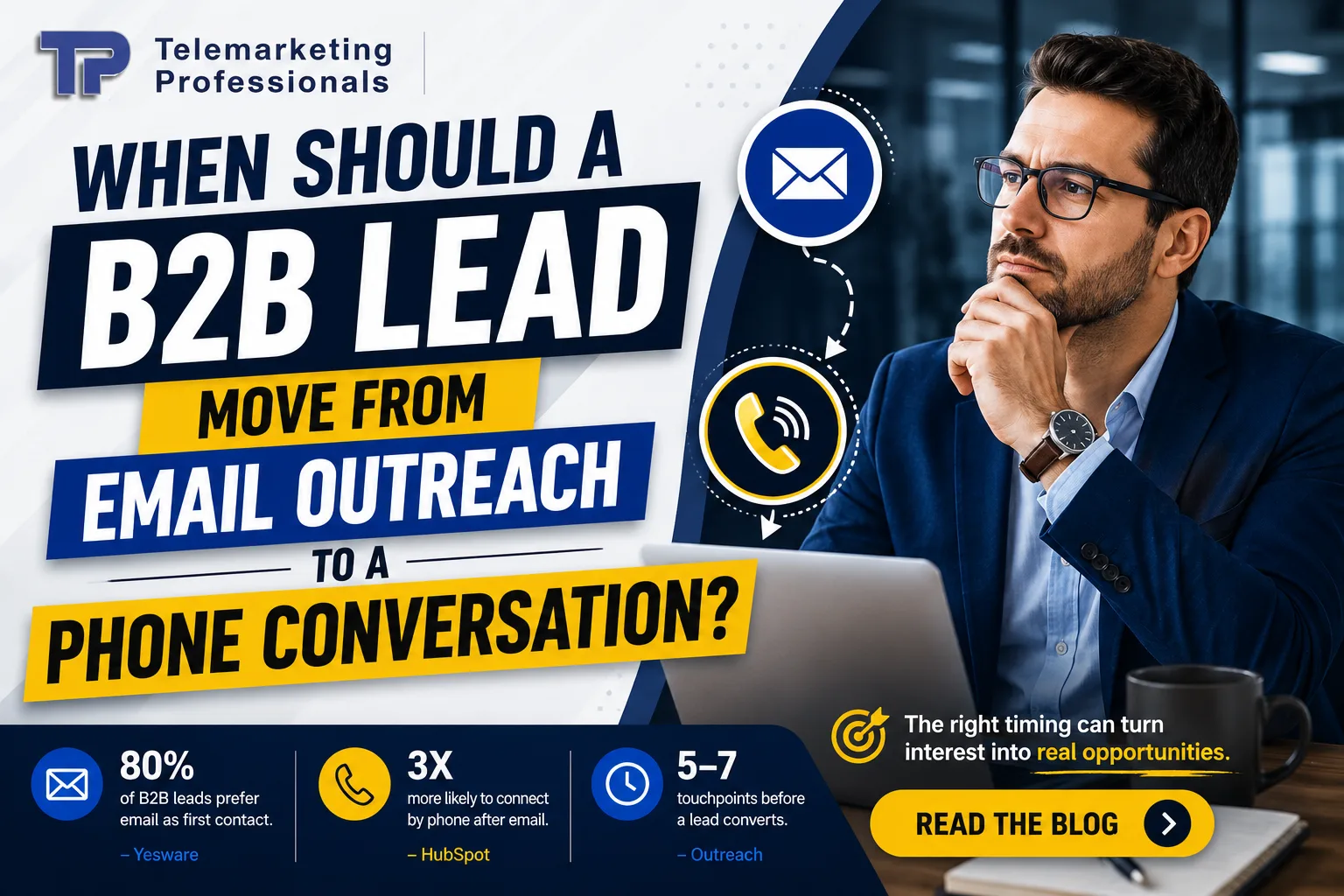
So, when should a B2B lead move from email outreach to a phone conversation?
The answer depends less on the number of emails sent and more on the prospect’s behavior, intent, and position in the buying journey.
Why Email Outreach Alone Can Create a Pipeline Bottleneck
Email outreach is scalable. A sales team can reach hundreds of prospects without spending hours making individual calls.
But scalability does not automatically mean conversion.
A decision-maker may read an email and understand the offer but still not respond. They may be interested but busy. They may have questions that are difficult to address through email. In other situations, your message simply arrives at the wrong time.
Continuing to send variations of the same email can leave potentially valuable leads sitting in the pipeline.
A phone conversation changes the dynamic.
Instead of waiting for the prospect to take the next step, a sales representative can identify the prospect’s situation, ask qualifying questions, and determine whether there is a genuine opportunity.
The goal is not to replace email with cold calling. It is to understand when email has done its job and a conversation should take over.
1. The Prospect Has Opened Multiple Emails but Hasn’t Replied
One email open tells you very little.
Multiple interactions can tell you considerably more.
Suppose a prospect has opened three emails over several days but has not replied. That behavior does not guarantee buying intent, but it can indicate that the subject is relevant enough to keep their attention.
Sending another generic follow-up may not move the conversation forward.
This can be an appropriate point for a call.
Rather than saying, “I noticed you opened my emails,” which can feel intrusive, the caller can reference the original business reason for contacting them.
For example, the conversation might focus on whether the problem your service solves is currently a priority for their organization.
The call becomes a qualification conversation rather than simply another sales touchpoint.
2. The Lead Visits a High-Intent Page on Your Website
Not every website visit has the same value.
Someone reading an educational blog may still be researching. A prospect visiting a pricing, service, case study, or contact page is demonstrating a different level of intent.
This becomes particularly valuable when website activity can be connected with an account already included in your outbound campaign.
High-intent pages may include:
- Service pages
- Pricing information
- Contact pages
- Case studies
- Testimonials
- Product comparison pages
- Demo or consultation pages
For example, imagine you send an appointment-setting email to an operations director.
They don’t respond.
Two days later, their company visits your appointment-setting service page and then views your testimonials.
That is a much stronger reason to prioritize a phone conversation than simply sending email number four.
The key is to use behavioral signals to determine call priority.
3. The Prospect Replies, “Send Me Some Information”
This response is often treated as an invitation to send a brochure and wait.
That can be a mistake.
“Send me some information” can mean several things:
- The prospect is genuinely interested but busy.
- They need something to share internally.
- They want to understand the service before committing to a meeting.
- They are politely trying to end the conversation.
The only way to understand which one applies is through qualification.
Send the requested information, but establish an appropriate next step.
A short follow-up phone conversation can help determine what information actually matters to the prospect and whether there is a genuine business requirement.
Without that conversation, the lead can easily become another forgotten CRM record marked “follow up later.”
4. The Lead Matches Your ICP but Isn’t Engaging Digitally
Engagement should influence outreach, but it shouldn’t be the only consideration.
Some of your strongest potential customers may rarely engage with cold emails.
Senior decision-makers receive large volumes of email every day. An excellent prospect may therefore show almost no visible digital engagement.
This is why Ideal Customer Profile (ICP) fit and buying intent should be evaluated together.
Consider factors such as:
- Company size
- Industry
- Geographic location
- Job title
- Decision-making authority
- Current business challenges
- Potential need for your solution
If a company strongly matches your ICP, waiting indefinitely for an email response may mean missing a valuable opportunity.
A well-researched phone call can create the conversation that email failed to generate.
5. You’ve Sent Several Relevant Emails Without a Response
There is no universal rule that says a prospect should receive exactly three emails before receiving a phone call.
However, continuously emailing someone who has not responded is unlikely to improve results forever.
The decision should depend on prospect value.
A low-fit contact showing no engagement may not deserve additional sales resources.
A high-value account that closely matches your ICP may justify a phone call much earlier.
This is where lead scoring can improve B2B lead generation.
Instead of treating every prospect equally, businesses can score leads based on characteristics and behaviors such as ICP fit, website activity, email engagement and previous conversations.
Higher-scoring prospects can then move into phone outreach faster.
6. A Prospect Has a Question That Email Cannot Answer Efficiently
Some questions should not become ten-email conversations.
Questions about implementation, pricing structure, timelines, integrations or specific business requirements can quickly become complicated over email.
When an interested prospect begins asking detailed questions, suggest a short conversation.
A five- or ten-minute call can often achieve what would otherwise require hours or days of back-and-forth communication.
More importantly, it gives the salesperson an opportunity to understand why the prospect is asking the question.
For example, “How quickly can you start?” may indicate an immediate requirement.
That context can easily be missed when sales teams focus only on answering the literal question in an email.
7. The Lead Has Previously Engaged but Suddenly Goes Quiet
A lead who stops responding should not automatically be considered lost.
Consider a prospect who:
- Responds to an initial email.
- Requests more information.
- Discusses potential requirements.
- Suddenly, he / she stops replying.
The change could be caused by internal priorities, budget approval, workload, another stakeholder, or simply a busy week.
Sending repeated “just following up” emails adds little value.
A phone conversation can help establish whether the opportunity is still active and what needs to happen next.
This is especially important for leads already showing meaningful buying intent.
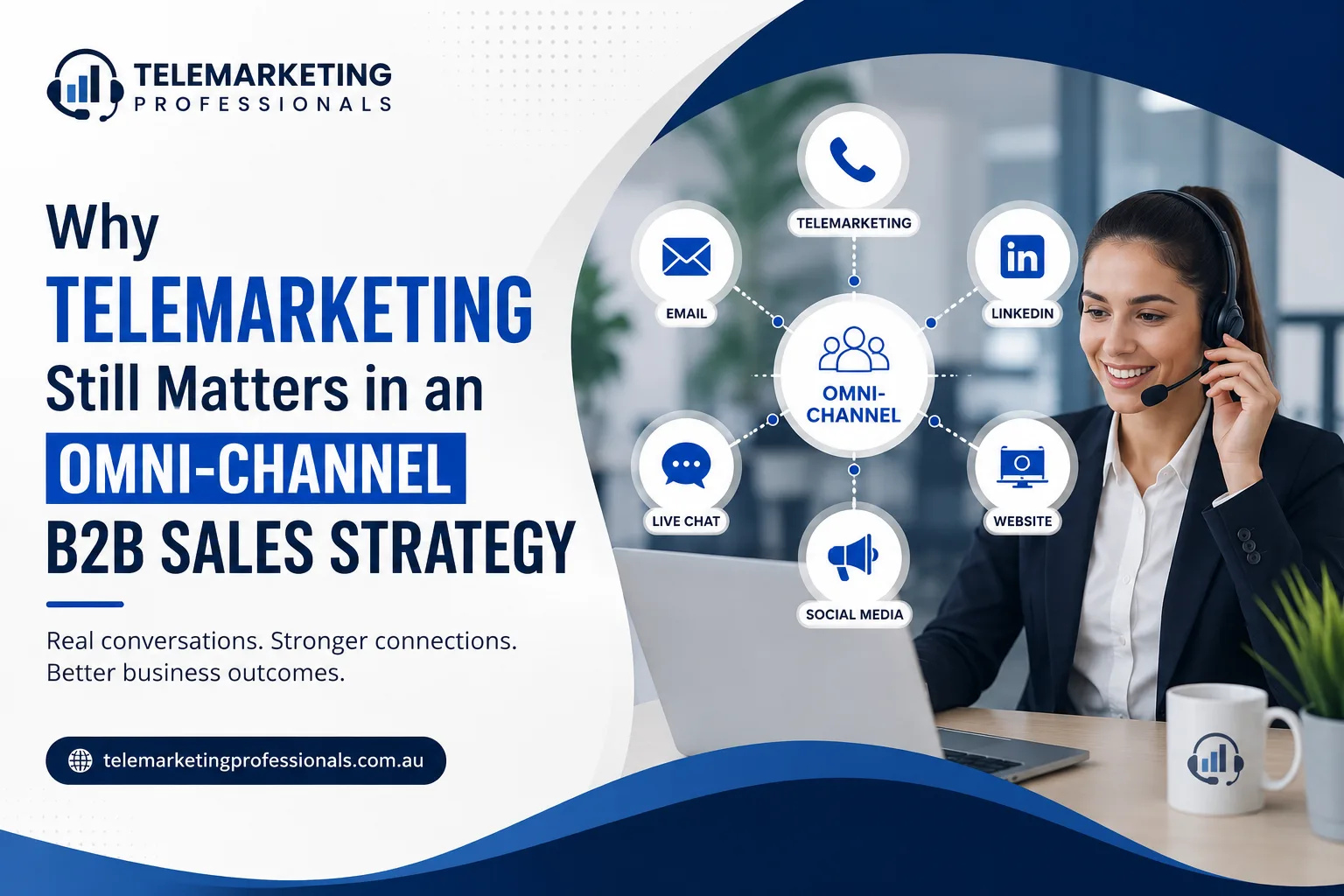
Email vs Phone: It Shouldn’t Be One or the Other
One of the biggest mistakes in outbound sales is treating email and telemarketing as competing strategies.
They work better when they support each other.
Email can create awareness.
A phone call can create dialogue.
LinkedIn can reinforce familiarity.
Content can provide credibility.
Another call can qualify the opportunity.
This is the foundation of an omni channel B2B lead generation strategy.
For example, an outreach sequence could look like this:
Day 1: Personalized introductory email
Day 3: LinkedIn profile visit or connection
Day 4: Phone call
Day 7: Value-focused follow-up email
Day 10: Second phone attempt
Day 14: Case study or useful resource
Day 18: Final call or nurture decision
The exact sequence will vary depending on the market, sales cycle, and target customer.
What matters is that every interaction has a purpose.
What Should Happen During the First Phone Conversation?
Moving a lead to phone outreach does not mean immediately trying to close a deal.
The first objective should usually be qualification.
A good B2B conversation should help uncover:
Need: Does the company actually have the problem you solve?
Current situation: How are they handling the problem today?
Impact: Is the current situation creating a meaningful business issue?
Authority: Is the person involved in the decision-making process?
Timing: Is solving the problem a current priority?
Next step: Does it make sense to schedule a more detailed sales conversation?
This prevents appointment setters from filling sales calendars with meetings that have little chance of progressing.
A qualified appointment should create value for both the prospect and the sales team.
When Should You Not Call?
Not every email lead needs a phone call.
Calling every person in a database regardless of relevance wastes sales resources and can create a poor customer experience.
A phone conversation may not be the right next step when:
- The company falls outside your target market.
- The contact has explicitly asked not to be contacted.
- There is no meaningful fit between their needs and your service.
- The lead is extremely early in the research process.
- Previous qualification confirms there is no current opportunity.
These leads can instead be placed into an appropriate nurture process where relevant.
How Outsourced Appointment Setting Can Bridge the Gap
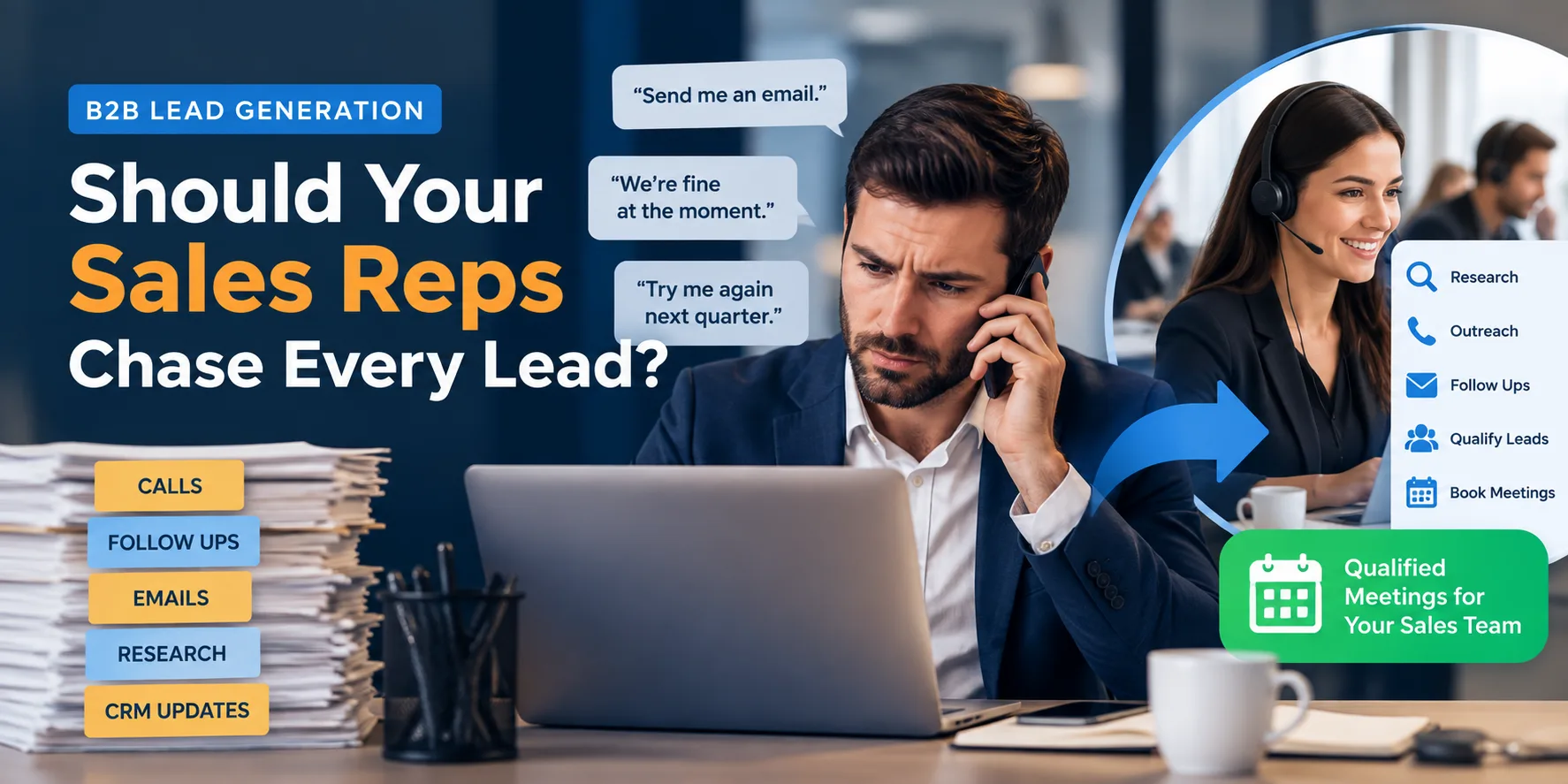
Many businesses have strong marketing activity but limited capacity to follow up every promising lead.
Sales representatives may also prioritise active opportunities over prospecting and qualification.
This creates a gap between lead generation and actual sales conversations.
An outsourced appointment setting or SDR team can help manage that transition.
Rather than simply making high volumes of calls, an effective outsourced team can prioritize prospects based on ICP fit, engagement and intent signals.
They can follow up email campaigns, qualify website enquiries, reconnect with older CRM leads, and determine whether a prospect is ready for a meeting with the sales team.
This allows internal salespeople to spend more time on qualified opportunities instead of chasing every lead.
Final Thoughts
The best time to move a B2B lead from email outreach to a phone conversation isn’t determined by a fixed number of emails.
It is determined by context and intent.
Multiple email opens, visits to high-intent website pages, strong ICP alignment, requests for information, detailed questions and previous engagement can all indicate that it is time for a human conversation.
The objective isn’t to call more people.
It is to call the right prospects at the right moment.
For Australian businesses looking to create a more consistent flow of qualified sales conversations, combining email outreach with professional telemarketing and appointment setting can help bridge the gap between generating a lead and creating a genuine sales opportunity.Telemarketing Professionals helps Australian businesses with B2B lead generation, appointment setting, telemarketing and outbound prospecting. A structured multichannel approach can ensure promising prospects don’t simply remain unread records in your CRM—they move towards meaningful sales conversations.