B2B buyers rarely respond to a single marketing channel anymore. A prospect might discover a business through Google, read a LinkedIn post, open an email, visit a service page, and still not be ready to book a meeting.
This is why modern B2B sales strategies increasingly rely on an omni channel approach.
Email marketing, LinkedIn outreach, SEO, paid advertising and content marketing can generate awareness and interest. But there is one channel that can add something these digital touchpoints often cannot: a real-time human conversation.
That is where telemarketing continues to play an important role.
Rather than viewing telemarketing as an isolated cold-calling activity, businesses can use it alongside digital channels to qualify prospects, understand their needs and move interested buyers towards the next step.
For organizations focused on B2B lead generation and appointment setting, the combination can create a more connected and effective sales process.
What Is an Omni channel B2B Sales Strategy?
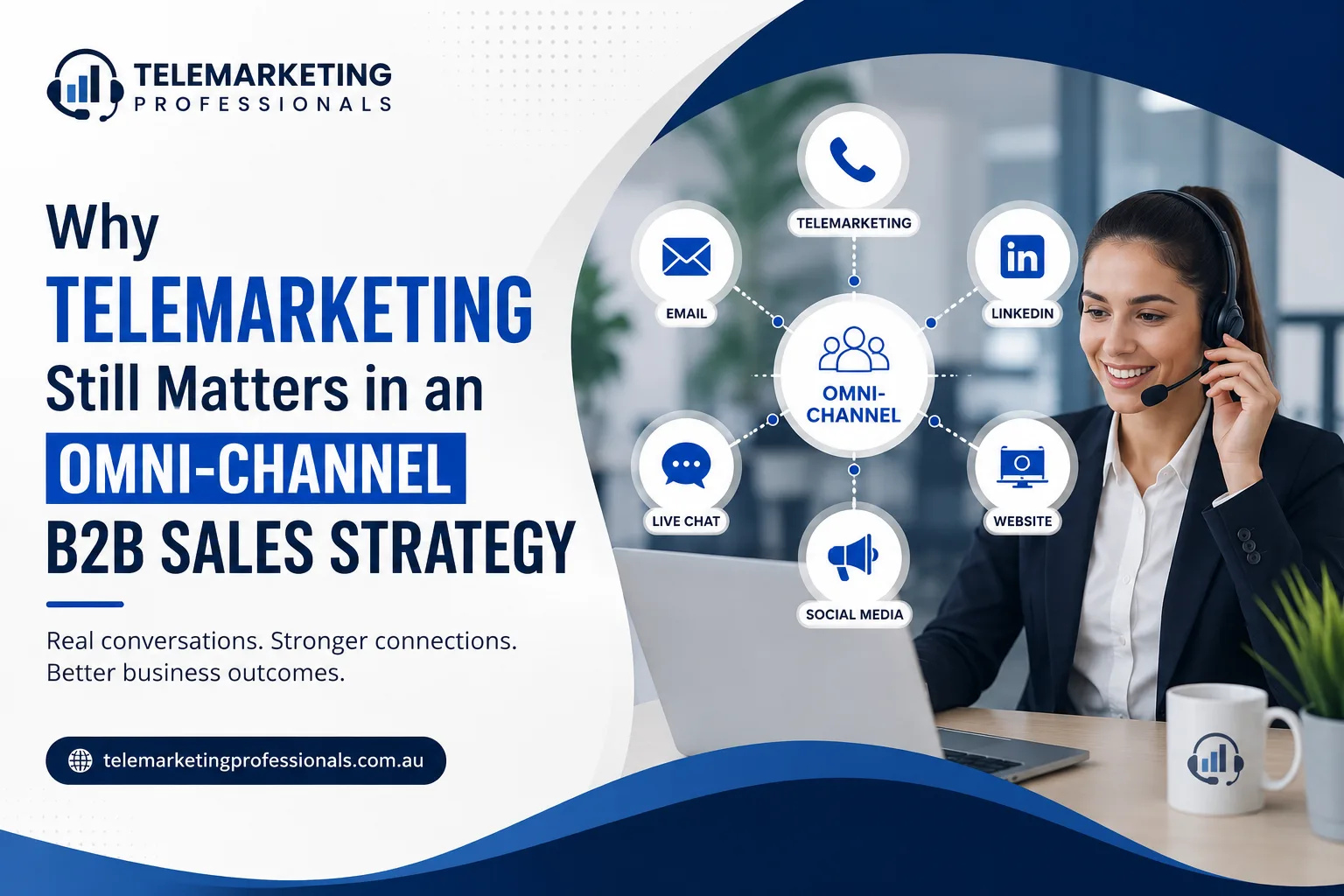
An omni channel B2B sales strategy uses multiple coordinated channels to engage prospects throughout their buying journey.
These channels may include:
- Email marketing
- Telemarketing and cold calling
- LinkedIn and social selling
- SEO and organic search
- Website content
- Paid advertising
- Webinars and events
- Retargeting
- Appointment setting
- Sales development representatives (SDRs)
The important word is coordinated.
Simply using five different channels does not automatically make a strategy omni channel. The channels should support one another and give sales teams useful context about each prospect.
For example, imagine a decision-maker visits a company’s appointment-setting page after receiving an email. Instead of sending another generic automated message, an SDR can use that engagement as a signal for a timely follow-up call.
The conversation is now supported by digital intent rather than being completely cold.
Why Does Telemarketing Still Matter in B2B Sales?
Digital marketing is highly effective at generating awareness and capturing demand. However, complex B2B purchasing decisions often involve questions that cannot be answered by an advertisement or automated email alone.
Prospects may want to understand pricing, implementation, suitability, timelines, or how a service applies to their specific situation.
A telemarketing conversation allows businesses to address these questions directly.
More importantly, it creates a two-way exchange.
Instead of simply tracking whether someone opened an email or visited a webpage, a salesperson can ask:
- What problem are you trying to solve?
- How are you currently handling it?
- Is improving this a priority?
- Who is involved in the decision?
- What timeframe are you working towards?
Answers to these questions provide valuable qualification information and can help determine whether a prospect should progress to an appointment.
Telemarketing Turns Digital Engagement Into Conversations
One of the biggest challenges in B2B marketing is turning engagement into action.
A company may generate:
- Website visitors
- Email opens
- Content downloads
- LinkedIn engagement
- Webinar registrations
- Form submissions
But engagement alone does not necessarily create a qualified sales opportunity.
Telemarketing can provide the bridge.
Consider a prospect who has opened several emails and visited a lead generation service page multiple times but has not completed a contact form.
This activity can indicate interest, but the reason for the interest remains unclear.
A well-timed call can uncover the answer.
The prospect may be actively evaluating suppliers. They may be researching options for the next quarter. Or they may simply be gathering information.
Either way, the sales team gains context that analytics alone cannot provide.
Telemarketing + Email: Creating Better Follow-Ups
Email is scalable and useful for introducing a company, sharing educational content and nurturing prospects.
However, B2B inboxes are crowded.
An email can be relevant and well written but still be overlooked because the recipient is busy.
Combining email with telemarketing gives businesses another opportunity to connect.
For example, an omni-channel sequence might look like this:
- Day 1: Send a personalized introductory email.
- Day 3: Connect with the prospect on LinkedIn.
- Day 5: Make a follow-up call.
- Day 8: Send a relevant case study or resource.
- Day 12: Call again with a specific reason for reaching out.
The telephone call does not replace email. It strengthens the overall sequence.
When the SDR calls, they can reference the context of the previous outreach instead of starting the conversation from zero.
Telemarketing + LinkedIn: Adding Human Interaction to Social Selling
LinkedIn has become an important channel for B2B prospecting.
Sales teams can research decision-makers, identify relevant companies, engage with content, and build familiarity before making direct contact.
But LinkedIn outreach can also become highly automated.
Prospects frequently receive generic connection requests and sales messages.
Telemarketing introduces direct human interaction into the process.
A salesperson might first identify an appropriate decision-maker on LinkedIn, understand their role and company, and then make a targeted call based on that research.
This creates a stronger approach than simply working through a large, unqualified calling list.
How Telemarketing Improves B2B Lead Qualification
Not every lead belongs in the sales pipeline.
One of the most expensive mistakes a business can make is asking senior salespeople to spend their time chasing prospects who have little need, authority or intention to buy.
Effective B2B lead generation should therefore focus on quality as well as volume.
Telemarketing allows an SDR or appointment setter to qualify prospects using criteria such as:
- Business need
- Company fit
- Decision-making authority
- Current solution or supplier
- Level of interest
- Purchasing timeframe
- Budget considerations
- Next-step readiness
This information can then be recorded in the CRM and passed to the appropriate salesperson.
The result is a clearer separation between an initial lead and a genuine sales opportunity.
Why Telemarketing Is Valuable for Appointment Setting
Booking a meeting is not simply about getting someone to agree to a calendar invitation.
The meeting should ideally have a genuine business reason behind it.
This is where professional appointment setting becomes valuable.
An appointment setter can introduce the business, identify a relevant pain point, establish whether there is sufficient interest, and then schedule a meeting with the sales team.
For example, consider a B2B company selling a complex service.
Instead of its account executives spending hours calling hundreds of prospects, an internal or outsourced SDR team can manage the early stages of prospecting.
The SDR team identifies suitable companies, makes contact, qualifies interest and schedules appropriate meetings.
Account executives can then spend more of their time conducting discovery calls, preparing proposals and closing opportunities.
Telemarketing Provides Insights Digital Analytics Cannot
Digital analytics can tell businesses a great deal about prospect behavior.
They can see which pages receive traffic, which campaigns generate clicks, and which emails produce engagement.
But analytics usually cannot explain why someone behaved that way.
Telemarketing can provide qualitative insight directly from the market.
After enough conversations, sales teams may begin hearing the same objections repeatedly:
- “Timing isn’t right.”
- “We already have a supplier.”
- “We need to understand the ROI.”
- “We don’t have enough internal resources.”
- “We’re interested, but not until next quarter.”
These conversations can influence far more than the calling campaign.
Marketing teams can use them to improve website messaging, FAQs, email sequences, sales collateral, and content topics.
In this way, telemarketing becomes a source of customer intelligence as well as a lead generation channel.
Where Does an Outsourced SDR Team Fit?
Building an internal SDR function requires recruitment, training, management, technology and ongoing performance monitoring.
For some organizations, an outsourced SDR or telemarketing team provides another option.
An outsourced team can support activities such as prospecting, cold calling, lead qualification, database validation, follow-ups, and appointment setting while the internal sales team focuses on later-stage opportunities.
This can be particularly useful when a company wants to test a new market, increase outbound activity, or create a more consistent flow of qualified meetings without immediately expanding its internal headcount.
The effectiveness of outsourcing, however, depends on campaign quality.
The provider needs a clear understanding of the target market, ideal customer profile, offer, qualification criteria, and expected outcomes.
The Future Is Not Digital vs Telemarketing
The more useful question for B2B businesses is not whether telemarketing is better than email, LinkedIn, or digital marketing.
It is how these channels can work together.
A prospect might:
- Discover your company through Google.
- Read one of your articles.
- Visit your website.
- See your company on LinkedIn.
- Receive a personalized email.
- Speak with an SDR.
- Book a discovery meeting.
That journey involves multiple interactions, but the telephone conversation may be the moment where passive interest becomes a real sales opportunity.
This is why telemarketing continues to matter within an omni channel strategy.
Final Thoughts
Modern B2B buyers use multiple channels to research businesses before making decisions. Sales and marketing strategies need to reflect that behavior.
SEO, email, LinkedIn, content and paid campaigns can create visibility and generate engagement. Telemarketing adds the human conversation that can qualify that engagement and move suitable prospects forward.
When integrated with B2B lead generation, appointment setting and an internal or outsourced SDR strategy, telemarketing can help businesses create a more structured path from initial awareness to qualified sales meetings.
The objective is not to call more people for the sake of activity.
It is to make the right call, to the right prospect, at the right point in their buying journey. That is where telemarketing continues to earn its place in an effective omni channel B2B sales strategy.
Telemarketing in an omnichannel B2B sales strategy is the use of phone conversations alongside channels such as email, LinkedIn, SEO, content marketing and paid advertising. Rather than operating as a standalone cold-calling activity, telemarketing helps businesses follow up on digital engagement, qualify prospects and move suitable leads towards a sales conversation.
Telemarketing remains important because it creates a real-time, two-way conversation with potential buyers. Digital channels can show that a prospect opened an email, visited a website or engaged with content, but a phone conversation can help uncover their needs, priorities, buying timeframe and readiness to take the next step.
Telemarketing supports B2B lead generation by helping businesses determine which prospects have genuine sales potential. An SDR or appointment setter can discuss business needs, company fit, decision-making authority, current solutions, level of interest and purchasing timeframe before progressing a lead to the sales team.
Email can introduce a business, share useful information and nurture prospects, while telemarketing adds direct human follow-up. For example, a business may send a personalised email, connect with the prospect on LinkedIn and then make a relevant follow-up call. The call can reference previous outreach, making the conversation more contextual rather than completely cold.
LinkedIn can help sales teams identify decision-makers, research companies and understand a prospect’s professional context. Telemarketing can then add direct human interaction. Instead of relying only on automated LinkedIn messages, an SDR can use that research to make a more relevant and targeted phone call.
Yes. Website visits, email opens, content downloads and form activity can indicate interest, but they do not always explain why a prospect is engaging. A well-timed telemarketing call can help determine whether the prospect is actively evaluating suppliers, researching for a future project or simply gathering information.
Telemarketing allows an appointment setter to speak directly with a prospect before booking a sales meeting. They can identify a relevant business need, establish interest, qualify the opportunity and determine whether there is a genuine reason for the prospect and sales team to meet.
An outsourced SDR team can support prospecting, cold calling, lead qualification, database validation, follow-ups and appointment setting. This can allow an internal sales team to spend more time on discovery calls, proposals and later-stage opportunities while the SDR team manages early-stage outreach.
Telemarketing does not necessarily need to replace email or LinkedIn. These channels perform different roles within the buyer journey. Email and LinkedIn can create awareness and engagement, while telemarketing can introduce a direct conversation that helps qualify interest and identify the appropriate next step.
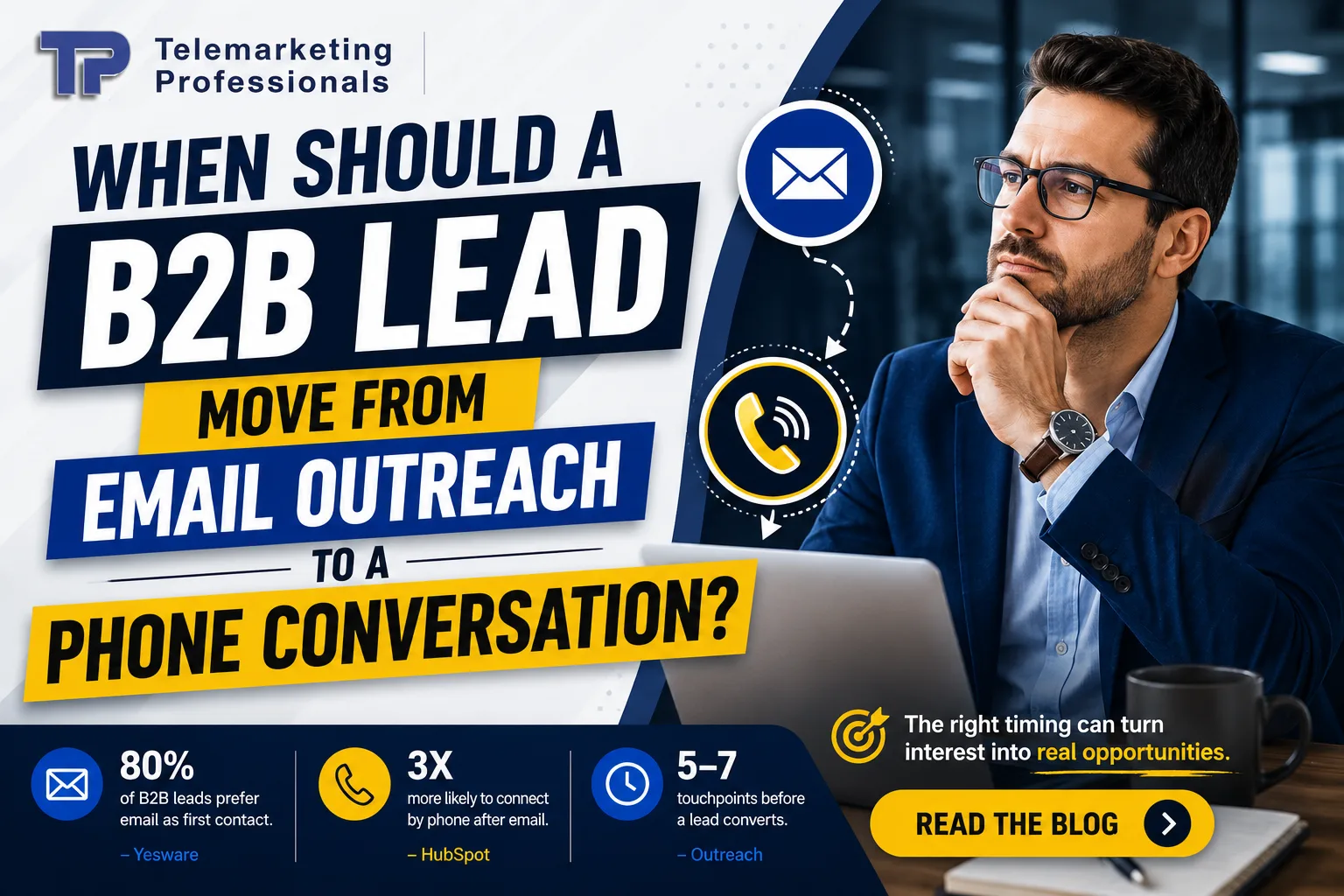
A phone conversation can become appropriate when a prospect shows meaningful buying signals, such as repeatedly visiting relevant service pages, engaging with multiple emails, responding to LinkedIn outreach, downloading content or requesting more information. The goal is to use these signals as context for a relevant conversation rather than calling simply to increase activity.
Telemarketing can be valuable for Australian B2B companies when it is targeted, relevant and integrated with other sales and marketing channels. Its value is strongest when calls focus on suitable prospects and are used to understand business needs, qualify opportunities and create meaningful next steps rather than simply maximising call volume.
The main benefit is the ability to turn digital signals into human conversations. Digital marketing can help businesses generate visibility and engagement, while telemarketing can provide the context needed to understand whether that engagement represents a genuine sales opportunity.